Free PDF Things Fall Apart: With Connections, by Chinua Achebe
Considering guide Things Fall Apart: With Connections, By Chinua Achebe to review is additionally required. You can select the book based upon the favourite motifs that you such as. It will engage you to love reading other books Things Fall Apart: With Connections, By Chinua Achebe It can be likewise concerning the necessity that obliges you to review the book. As this Things Fall Apart: With Connections, By Chinua Achebe, you could discover it as your reading publication, also your preferred reading publication. So, discover your favourite publication below and get the connect to download and install the book soft file.
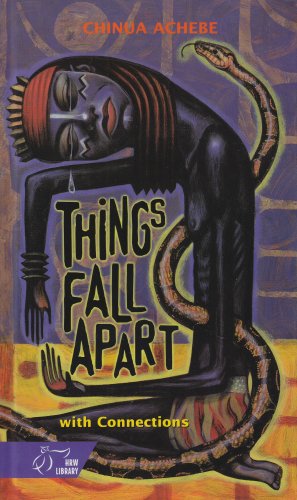
Things Fall Apart: With Connections, by Chinua Achebe

Free PDF Things Fall Apart: With Connections, by Chinua Achebe
Things Fall Apart: With Connections, By Chinua Achebe When creating can transform your life, when creating can improve you by supplying much cash, why do not you try it? Are you still quite confused of where understanding? Do you still have no suggestion with just what you are visiting create? Now, you will certainly need reading Things Fall Apart: With Connections, By Chinua Achebe A good author is a great viewers at the same time. You could define how you compose depending on exactly what publications to check out. This Things Fall Apart: With Connections, By Chinua Achebe can help you to address the trouble. It can be among the ideal resources to establish your writing skill.
To get over the trouble, we now provide you the innovation to download the publication Things Fall Apart: With Connections, By Chinua Achebe not in a thick published file. Yeah, reading Things Fall Apart: With Connections, By Chinua Achebe by on-line or obtaining the soft-file only to review could be among the methods to do. You might not feel that reviewing a book Things Fall Apart: With Connections, By Chinua Achebe will work for you. However, in some terms, May people effective are those that have reading routine, included this sort of this Things Fall Apart: With Connections, By Chinua Achebe
By soft file of the publication Things Fall Apart: With Connections, By Chinua Achebe to read, you might not require to bring the thick prints everywhere you go. Any kind of time you have going to read Things Fall Apart: With Connections, By Chinua Achebe, you could open your kitchen appliance to read this book Things Fall Apart: With Connections, By Chinua Achebe in soft file system. So simple and also fast! Checking out the soft data publication Things Fall Apart: With Connections, By Chinua Achebe will provide you simple means to review. It can also be much faster since you could read your e-book Things Fall Apart: With Connections, By Chinua Achebe anywhere you desire. This on the internet Things Fall Apart: With Connections, By Chinua Achebe can be a referred e-book that you can appreciate the remedy of life.
Because e-book Things Fall Apart: With Connections, By Chinua Achebe has great benefits to check out, lots of people now grow to have reading practice. Sustained by the industrialized modern technology, nowadays, it is simple to obtain guide Things Fall Apart: With Connections, By Chinua Achebe Even the book is not alreadied existing yet on the market, you to hunt for in this site. As just what you can locate of this Things Fall Apart: With Connections, By Chinua Achebe It will actually ease you to be the very first one reading this e-book Things Fall Apart: With Connections, By Chinua Achebe and get the advantages.
Chinua Achebe’s tragic novel of pre-colonial Igbo society was a major literary and cultural event when it was published in 1958.
Written during a period of nationalist assertion and an emerging modern culture in Africa, Things Fall Apart’s influence quickly spread from Nigeria throughout Africa and beyond. In its fifty years, this unforgettable novel has been translated into fifty languages and has been read by millions.A Chronology of Achebe’s life and work and a Selected Bibliography are also included.
2 maps- Sales Rank: #537213 in Books
- Published on: 1999-10-20
- Format: Bargain Price
- Number of items: 1
- Dimensions: 8.50" h x 5.00" w x .75" l,
- Binding: Paperback
- 256 pages
Amazon.com Review
One of Chinua Achebe's many achievements in his acclaimed first novel, Things Fall Apart, is his relentlessly unsentimental rendering of Nigerian tribal life before and after the coming of colonialism. First published in 1958, just two years before Nigeria declared independence from Great Britain, the book eschews the obvious temptation of depicting pre-colonial life as a kind of Eden. Instead, Achebe sketches a world in which violence, war, and suffering exist, but are balanced by a strong sense of tradition, ritual, and social coherence. His Ibo protagonist, Okonkwo, is a self-made man. The son of a charming ne'er-do-well, he has worked all his life to overcome his father's weakness and has arrived, finally, at great prosperity and even greater reputation among his fellows in the village of Umuofia. Okonkwo is a champion wrestler, a prosperous farmer, husband to three wives and father to several children. He is also a man who exhibits flaws well-known in Greek tragedy: Okonkwo ruled his household with a heavy hand. His wives, especially the youngest, lived in perpetual fear of his fiery temper, and so did his little children. Perhaps down in his heart Okonkwo was not a cruel man. But his whole life was dominated by fear, the fear of failure and of weakness. It was deeper and more intimate than the fear of evil and capricious gods and of magic, the fear of the forest, and of the forces of nature, malevolent, red in tooth and claw. Okonkwo's fear was greater than these. It was not external but lay deep within himself. It was the fear of himself, lest he should be found to resemble his father. And yet Achebe manages to make this cruel man deeply sympathetic. He is fond of his eldest daughter, and also of Ikemefuna, a young boy sent from another village as compensation for the wrongful death of a young woman from Umuofia. He even begins to feel pride in his eldest son, in whom he has too often seen his own father. Unfortunately, a series of tragic events tests the mettle of this strong man, and it is his fear of weakness that ultimately undoes him.
Achebe does not introduce the theme of colonialism until the last 50 pages or so. By then, Okonkwo has lost everything and been driven into exile. And yet, within the traditions of his culture, he still has hope of redemption. The arrival of missionaries in Umuofia, however, followed by representatives of the colonial government, completely disrupts Ibo culture, and in the chasm between old ways and new, Okonkwo is lost forever. Deceptively simple in its prose, Things Fall Apart packs a powerful punch as Achebe holds up the ruin of one proud man to stand for the destruction of an entire culture. --Alix Wilber
From Library Journal
Peter Frances James offers a superb narration of Nigerian novelist Achebe's deceptively simple 1959 masterpiece. In direct, almost fable-like prose, it depicts the rise and fall of Okonkwo, a Nigerian whose sense of manliness is more akin to that of his warrior ancestors than to that of his fellow clansmen who have converted to Christianity and are appeasing the British administrators who infiltrate their village. The tough, proud, hardworking Okonkwo is at once a quintessential old-order Nigerian and a universal character in whom sons of all races have identified the figure of their father. Achebe creates a many-sided picture of village life and a sympathetic hero. A good recording of this novel has been long overdue, and the unhurried grace and quiet dignity of James's narration make it essential for every collection.?Peter Josyph, New York
Copyright 1998 Reed Business Information, Inc.
Review
"Achebe is gloriously gifted with the magic of an ebullient, generous, great talent."
--Nadine Gordimer, "The New York Times Book Review"
""Things Fall Apart" may well be Africa's best loved novel. . . . For so many readers around the world, it is Chinua Achebe who opened up the magic casements of African fiction." --Kwame Anthony Appiah
"Achebe is gloriously gifted with the magic of an ebullient, generous, great talent."
--Nadine Gordimer, "The New York Times Book Review"
"A vivid imagination illuminates every page. . . . This novel genuinely succeeds in penetrating tribal life from the inside."
--"Times Literary Supplement"
Most helpful customer reviews
21 of 22 people found the following review helpful.
In this English professor's all-time top five
By S. Ward
One of the best books I've ever read, in my top five of all time, and I'm an English professor, so you know I've done some reading. I believe I read it in a matter of two or three hours the first time because I was desperate to know what was going to happen to Okonkwo and his kin with the invasion of European colonization. Do not be put off by what you may have heard about the violence and/or cruelty; there are a few parts where the content is a little rough, but the unflinching lack of sentimentalism - the matter-of-fact tone - makes the events tolerable. I teach a lot of folks who are older teens/early twenties, and honestly, I don't think this is a book that should be taught in high school or at the undergrad level because I think it actually helps to have some life behind you when you read it for the first time. If I knew in advance (which I never do) that I was going to have a class full of people over thirty, I would use it in a class without question. I would also say it's a must-read for men because of its powerful depictions of the conflicts between fathers, sons, and just male kinship relationships in general. Achebe also gives great insight into two strong powerful female characters, his second wife and one of his daughters, even though they have a minimal amount of page time.
5 of 5 people found the following review helpful.
I wrote a paper on this one, so here...
By Chewy
This is an absolutely wonderful story of a classic tragic hero. Okonkwo is a relatively young Nigerian man of Ibo tribe. He is a strong and unyielding father and husband; however, his physical strength is unmatched by his tremendous emotional strength. Okonkwo has worked very hard his entire life to rise within the social ranks of his tribe. He works tirelessly on his farm for monetary wealth. He goes to battle fiercely for the social status of valor. He builds himself the largest compound in his area. And then, as they often do... things fall apart.
Things Fall Apart was the first look the European-American centric world had into African culture from the perspective of someone actually within that culture. What is even more fantastic than that is that this novel about Africa and imperialism’s negative effect was published in 1959 and was even in that time very successful. Chinua Achebe attempts to explain that in an interview with Katie Bacon, “People from different parts of the world can respond to the same story, if it says something to them about their own history and their own experience.” Achebe goes on to explain the idea of cross-cultural literature more ineptly.
So, is Okonkwo really so tragic of a hero? I have come to understand that in the context of a European dominated literature field Okonkwo would indeed be classified as a tragic hero. However, in this light of literature dominated by shared experience, I feel that Okonkwo succeeded where no other hero could have. He alone was able to spread the possibility of literary success to writers of nations not previously considered advanced enough to produce such works. No matter how tragic Okonkwo's own story, he was able to open up the entire world to reading it simply because he possessed that great characteristic of a hero, the ability to make others empathize with his situation.
4 of 4 people found the following review helpful.
A man too manly for his own good
By Bernie Gourley
“Things Fall Apart” is about a man who conducts his life ever trying to distance himself from his father. In the process, he sows the seeds of his own destruction. Residing in the small (fictional) Nigerian village of Umuofia in the late 19th century, Okonkwo strives to be hyper-masculine in everything he does. As a young man he becomes a village wrestling champion and, when it comes time to start farming, he’s driven to be the best farmer possible in order to pay off his debts and to be as wealthy as possible. He feels that his father, who was constantly in debt and negligent in his familial duties, was weak and effeminate. On the one hand, Okonkwo’s drive is respect worthy, but, on the other, his need to appear strong in the extreme comes off as a bit pitiful.
There are a couple of crucial events in Okonkwo’s life in which his need to appear manly results in great inner distress. The first occurs when it’s determined that a young man who’s been staying with Okonkwo’s family must be killed. (The young man was sent to Umuofia as a settlement for a wrong between the young man’s father and an Umuofia resident.) Okonkwo has been a father to the young man. Even when a village elder tells Okonkwo to have no part in the killing owing to being like a father to the boy, Okonkwo feels he must participate lest he be seen as effeminate. Of course, Okonkwo is wracked with guilt because he murdered a boy who’d been like a son to him. Later, an accidental discharge of Okonkwo’s firearm kills an innocent young man. The worst part of this for Okonkwo is that an accidental killing is seen as a “woman’s offense.” As punishment, Okonkwo and his family are sent in exile on another village for seven years. Okonkwo isn’t so much torn up by killing another innocent as by the fact that the way it happened makes him look girly in the eyes of others—or so he believes.
Besides the character portrait of Okonkwo, the book is also a commentary on the nature of colonialism and proselytizing missionaries. The first part of the book is set in a pre-colonial state, but in the latter half the rapidly developing tensions between the missionaries and the local villagers is featured. When Okonkwo and his family return to Umuofia after seven years, he finds that white men have built a church and are actively seeking to turn the villagers away from the indigenous beliefs. Of course, for Okonkwo this is just too much, and he can’t believe others are putting up with this. (Adding to his torment is the fact that his son is one of the converts—possibly because that son himself wants to distance himself from the father who murdered his best friend [the boy from the other village.]) Okonkwo is ultimately unable to tolerate that the world has become something so different from what he believes is right, and to continue living means to steer away from the path that he has locked his life into.
This short and thought-provoking book is a great window into pre-colonial Africa and the clash of worldviews that colonization brought. It’s also a cautionary tale about not having sympathy for the failings of one’s father—not to mention the weakness inherent in our own humanity.
Things Fall Apart: With Connections, by Chinua Achebe PDF
Things Fall Apart: With Connections, by Chinua Achebe EPub
Things Fall Apart: With Connections, by Chinua Achebe Doc
Things Fall Apart: With Connections, by Chinua Achebe iBooks
Things Fall Apart: With Connections, by Chinua Achebe rtf
Things Fall Apart: With Connections, by Chinua Achebe Mobipocket
Things Fall Apart: With Connections, by Chinua Achebe Kindle


